My first book project, titled Insurgent Passages: Frontiers of War and Settlement in South Korea, 1945-1975, conceptualizes the history of South Korean counterinsurgency in wartime Korea and Vietnam as a process of both refugee settlement and anticommunist knowledge production. Interrogating the relation between relocation and representation, the book reveals the critical role of the South Korean cultural field in the construction of militarized spaces of settlement and internment, from model villages and work communes at home to strategic hamlets and POW camps in South Vietnam. In reconstructing these spaces, it reads a wide range of unexamined Korean-language texts—military theory, war correspondence, police journals, travel writing, letters and diaries, family photography—alongside more familiar sources like memoirs and oral histories. As a history and discourse of settlement, I argue, counterinsurgency leveraged existing ideologies of family and domesticity, framing the home as both an instrument of pacification and a potential communist sanctuary.
While recent critical studies of both counterinsurgency and the Korean War have focused on the consequences of foreign war for race relations and carceral apparatuses in the United States, my book turns to the social and cultural effects of counterinsurgency in South Korea itself. Shifting perspective from the U.S. imperial center to the mobilized postcolonial subject, the book uncovers local forms of anti-war critique that illuminate the interplay between global militarism and internal social difference. Relatedly, the study offers a new way of thinking about Cold War culture and ideology in the postcolonial world by paying close attention to the social and material embeddedness of what is almost always dismissed as anticommunist literature.
I am also in the early stages of a second book project on the cultural history of violence in modern and contemporary Korea. One enduring consequence of Cold War culture in South Korea is the association of modern history itself with violence, reflected in forms of popular historical discourse that periodize the twentieth century into lists of incidents and scandals. The book will critique this entanglement of popular and even academic history writing with Cold War ideology while reimagining wartime and authoritarian violence through the interrelated theoretical frameworks of disappearance, sacrifice, incarceration, and terrorism. I am currently writing one of these sections as an article, “Archive Trauma and the Cheju Uprising,” which explores the prominence of disappearance in a diverse set of writings on the Cheju Uprising, from literary fiction and oral history to reportage and police memoirs.
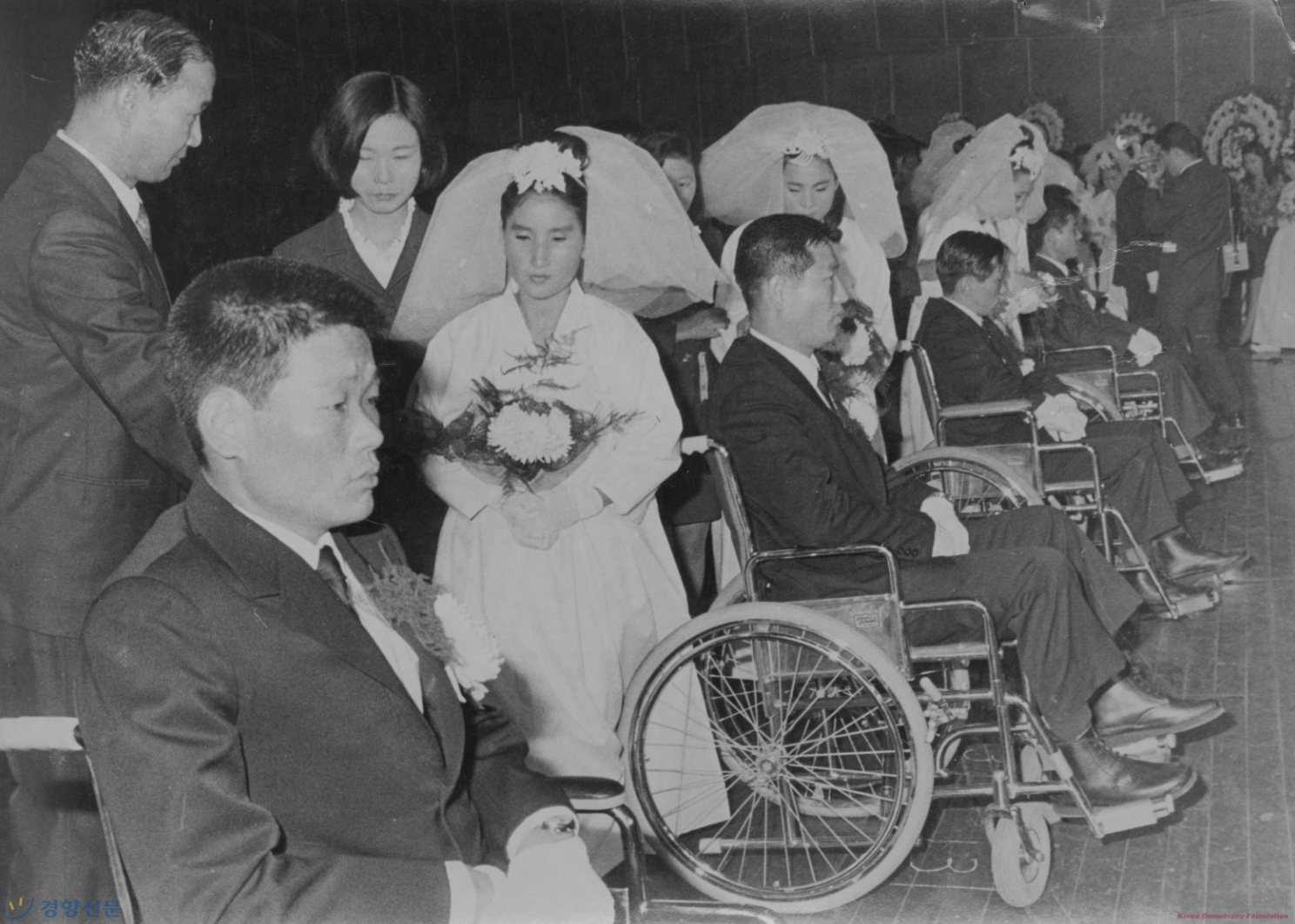
Joint wedding ceremony for injured Vietnam War veterans, October 1969. Source: Korea Democracy Foundation.
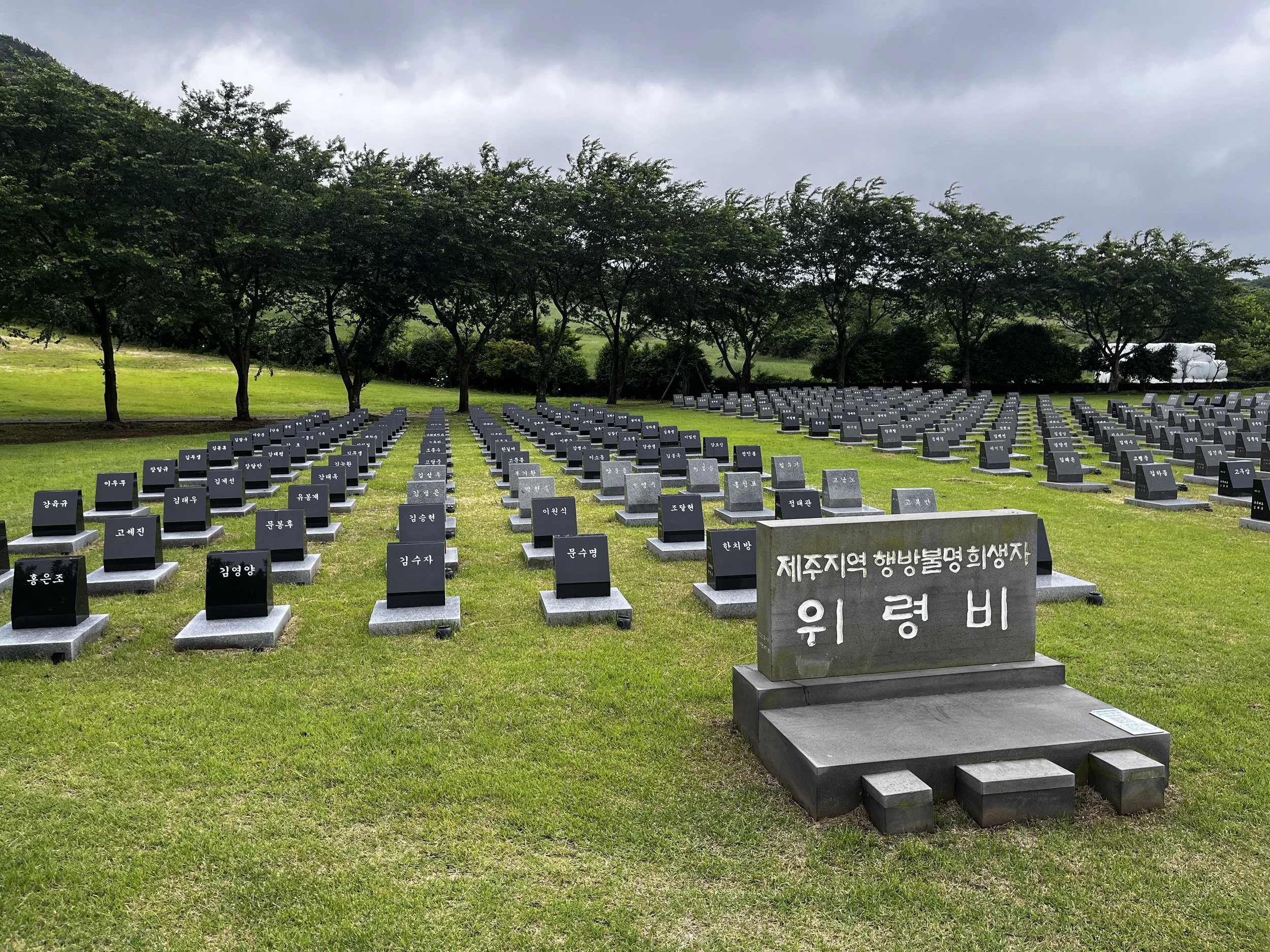
Tombstone Park for the Missing, Jeju 4.3 Peace Park. Photograph taken by the author, 2026.